As arson attacks hit Jewish sites across London, British authorities are now openly asking whether Iranian proxies are helping fuel a new wave of antisemitic intimidation.
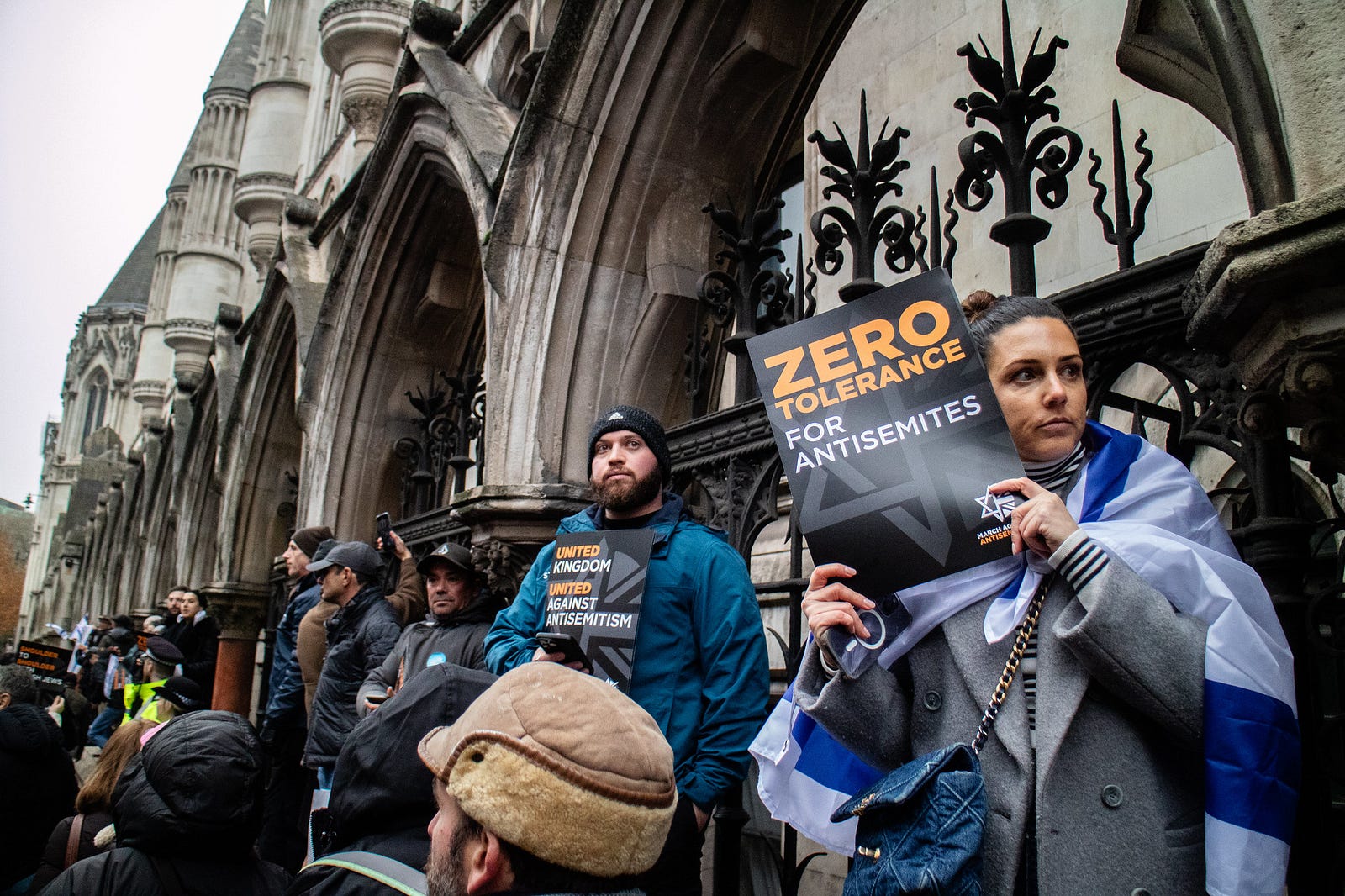
Something deeply ugly is happening in London, and British authorities are no longer treating it as a string of random, unrelated incidents.
In just the past few weeks, Jewish sites and Jewish-linked places in north London have been hit with a series of arson attacks or attempted arsons: volunteer ambulances used by the Jewish community in Golders Green, a synagogue in Finchley, a Jewish business in Barnet, bins set ablaze outside a communal block in Barnet, and, most recently, Kenton United Synagogue in Harrow.
Counterterror police have taken the lead, and they are openly examining whether these attacks are the work of Iranian proxies.
Police are not speaking in vague generalities, either.
The Metropolitan Police now say that several premises linked both to Britain’s Jewish community and to people who oppose the Iranian regime have been targeted. They also say that most of these attacks have been claimed online by a group called Ashab al-Yamin, which has claimed similar attacks on Jewish- or Israeli-linked sites elsewhere in Europe.
Senior counterterrorism officials are even considering whether London is seeing what they call “violence as a service” — criminals with no real ideological commitment allegedly being paid to do dirty work for others. That is not street violence in any ordinary sense.
It’s organized, systematic; sinister.
And the Iranian angle did not come out of nowhere. This is happening against a much larger backdrop of Iranian hostile activity in Britain.
In October 2025, MI5 Director General Ken McCallum said MI5 had tracked more than twenty potentially lethal Iran-backed plots in the previous year alone. In March 2026, two men appeared in a London court accused of carrying out hostile surveillance on Jewish targets, including the Israeli Embassy and Britain’s oldest synagogue, on behalf of Iran.
The British government has also admitted Iran often works through criminal proxies to obscure its hand. So when police look at these fires and ask whether proxies are involved, they are not indulging in fantasy. They are following a pattern Britain’s own security establishment has been warning about for some time.
Worse, all of this is unfolding inside a broader crisis of anti-Jewish hatred in Britain.
The Community Security Trust recorded 3,700 antisemitic incidents in the UK in 2025, the second-highest annual total it has ever logged. That was up from 3,556 in 2024 and far above pre-October 7 levels. CST says monthly antisemitic incidents in 2025 averaged double the rate of the year before Hamas’s massacre in Israel. Greater London alone accounted for 1,844 incidents. Damage and desecration of Jewish property rose to a record 217 cases.
This is not paranoia on the part of British Jews. It is happening.
Official government figures tell a similarly grim story. The Home Office said police-recorded religious hate crime in England and Wales rose again in the year ending March 2025, reaching a record level. Jewish people remained one of the main targets, and the Crime Survey for England and Wales estimated Jewish people were among the most likely religious groups to be victimized by religiously motivated hate crime.
Even where some categories fluctuated year to year, the larger truth remained the same: anti-Jewish intimidation in Britain is not marginal, and it is not disappearing on its own.
So, are Iranian proxies behind these most recent anti-Semitic attacks in the UK? It is not some overheated theory. It is simply where the evidence is pointing, and it is serious enough that British counterterror police are saying so out loud. To the press.
The wiser instinct here is not to minimize, but to recognize the shape of the threat before it gets worse. If Jewish ambulances, synagogues, businesses, and community buildings can be targeted in one of the world’s great capitals while authorities warn of proxy tactics and foreign-state links, then Britain is not merely facing a hate-crime problem. It may be facing a campaign. And if that is true, then London is not seeing random fire-setting.
It is seeing terror by installment.
(Contributing writer, Brooke Bell)